Local SEO vs Regular SEO: Which Does a Houston Business Need?
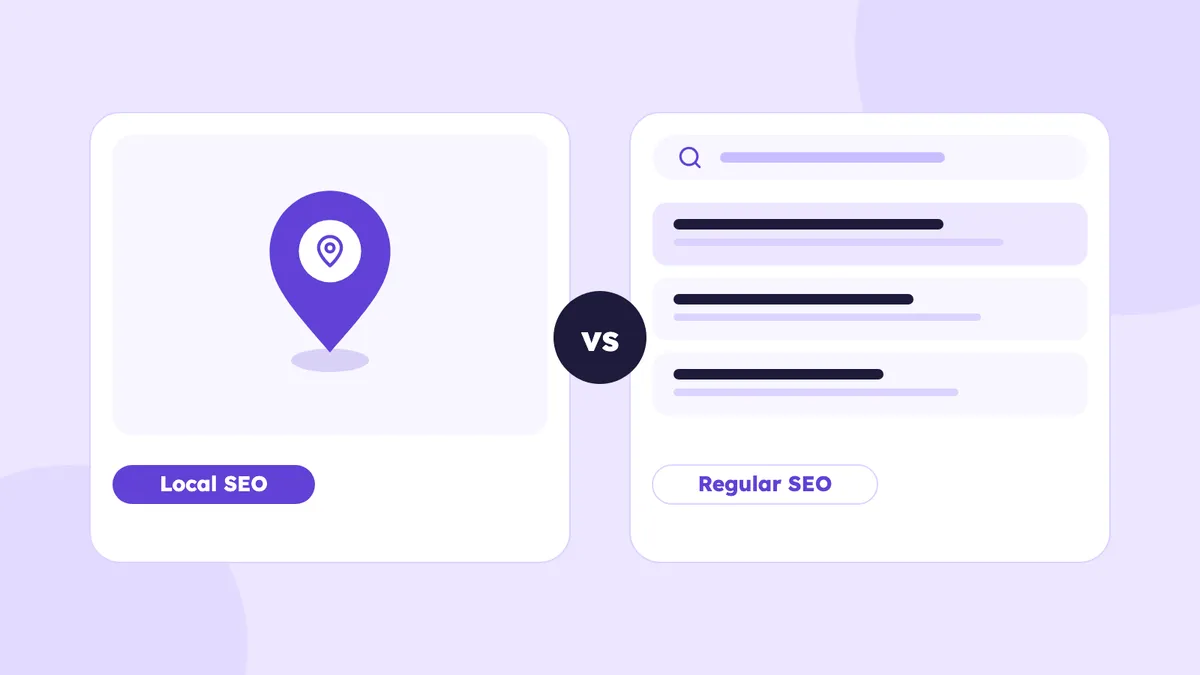
Local SEO and regular SEO use many of the same tools, but they aim at different searches. Picking the wrong one means spending money to rank where your customers are not looking. This guide explains the difference and shows which fits a Houston business.
The short answer
- If your customers search with a place in mind ("plumber Katy", "dentist near me", "Houston family lawyer"), you need local SEO first.
- If your customers search for a product, a topic or an answer without a place ("project management software", "how to read a roof estimate"), you need regular SEO.
- Many businesses need both, in a sensible order.
What local SEO covers
Local SEO helps you appear for searches tied to a location. It focuses on:
- The Google Business Profile. Categories, services, photos, hours and posts.
- The map pack. The three listings with a map at the top of Google. Our guide on how to show up in the map pack goes deeper.
- Reviews. Getting them steadily and replying to them.
- Citations. Consistent business details across directories.
- Local pages. Service and area pages written for each place you serve.
- Local links and mentions. Chambers, sponsors, partners and local press.
See our local SEO service in Houston.
What regular SEO covers
Regular SEO, sometimes called organic or national SEO, aims to rank pages for searches where location does not matter. It focuses on:
- Content. Pages and articles that answer specific questions or match product searches.
- Technical health. Speed, indexing, structure and mobile use.
- Authority. Links from relevant sites across the web, not only local ones.
- Topic coverage. Building a set of connected pages that cover a subject well.
See our technical SEO service and SEO content writing.
The main differences
- Goal. Local SEO brings nearby customers by phone, visit or booking. Regular SEO brings visitors from anywhere.
- Where you appear. Local SEO targets the map pack and local results. Regular SEO targets the standard blue links.
- Key signals. Local relies on distance, reviews and the business profile. Regular relies on content quality and links.
- Search wording. Local uses city names, neighborhoods and "near me". Regular uses topics and product names.
- Best fit. Local suits businesses serving a defined area. Regular suits businesses selling nationally or online.
Which one does your business need?
Service-area businesses and storefronts. Plumbers, HVAC companies, roofers, cleaners, pool services, dentists and restaurants live on local searches. Start with local SEO. Our pages for plumbers, HVAC companies, roofers and dental practices show how this works by industry.
Law firms and medical practices. Patients and clients search by place and by problem. You need local SEO for the map pack and content for the questions people ask. See SEO for lawyers and medical practices.
E-commerce stores. If you ship across the country, regular SEO matters most. If you also have a physical store in Houston, add local SEO for that location. See e-commerce SEO.
Energy and B2B companies. Buyers often search for the service or product without a city, so regular SEO leads, with location pages for the markets you serve.
Multi-location businesses. You need local SEO for every location, plus regular SEO for the brand and for broader searches.
Where they overlap
Local and regular SEO share the same base. A fast, clear, well-structured website helps both. Good content helps both. Reviews and mentions help your reputation in both. That is why a weak website holds back even strong local work, and why technical fixes come early in nearly every project.
AI search tools also draw on both. Clear business details and helpful content make it easier for tools like ChatGPT and Google AI Overviews to describe you. See AI SEO in Houston.
What to start with
A simple order works for most Houston businesses:
- Fix the foundation. Tracking, indexing, site speed and a clean structure.
- Local first, if you serve an area. Optimize your Google Business Profile, collect reviews, and build service and area pages.
- Add content and links. Once the local base is steady, publish pages and articles that bring in broader searches and build authority.
- Track and adjust. Review calls, leads, rankings and traffic every month.
Budget follows scope. On our pricing page, Starter at $500 a month centers on the local foundation. Growth at $900 a month adds more pages, link building and AI search work. Authority at $1,500 a month and Custom at $2,500+ cover competitive and multi-location markets.
Common mistakes
- Only working on the Google Business Profile. The website behind it still matters.
- Targeting national terms when customers search locally. Traffic from the wrong places does not call you.
- Thin city pages. The same text with a different city name does not help, and can hurt.
- Ignoring reviews. They affect both ranking and whether people contact you.
- Skipping tracking. Without call and lead tracking you cannot tell what works.
- Expecting overnight results. Both kinds of SEO take months of steady work.
How to split your effort
If you have to divide a small budget, a practical split for a local service business is most of the effort on local work in the first three months, then adding content as the foundation holds. For a business that sells online, flip it: most of the effort on regular SEO, with a small amount for a store location if you have one. Review the split every quarter, using calls, form leads and orders as the guide instead of rankings alone. A change in what customers search for, such as a new service you want to sell, is a good reason to adjust.
Five questions that settle it
Answer these honestly and the choice usually becomes clear:
- Do customers need to be near you? If the job happens at a Houston address or in your shop, local SEO leads.
- Do you hide your address or serve customers at their location? Service-area businesses can still rank in the map pack, but the setup is different. Read the Google guidelines for hiding an address.
- Can you sell to someone in another state? If yes, regular SEO matters, because those buyers do not search by your city.
- Do you have more than one location? Each location needs its own profile and its own page.
- Do your customers ask questions before they buy? If they do, content that answers those questions brings in regular search traffic on top of local calls.
Two examples
A Houston roofer. Customers search "roof repair Katy" or "roofer near me" after a storm. The work happens at their house. The right plan is local SEO: a verified profile with the right categories, steady reviews after each job, a page for each service and each area, and local mentions. Regular blog content comes later, once those pages are working.
An online store in Houston that ships nationwide. Customers search for products and comparisons, and almost none of them care where the warehouse is. The right plan is regular SEO: product and category pages, clean technical structure and content that answers buying questions. A Google Business Profile helps only if there is a place customers can visit.
Frequently asked questions
Is local SEO cheaper than regular SEO?
Often it is cheaper to start, because the area and competition are smaller. A very competitive local market, such as law or roofing in Houston, can still need a larger budget.
Can I do local SEO without a website?
You can have a Google Business Profile without one, but a website gives Google more to trust and gives customers a place to learn more. A site improves results.
Do I need both from day one?
Usually not. Most local businesses start with local SEO and add regular content as results build.
Will regular SEO help me show up in the map pack?
Indirectly. A strong website helps, but the map pack mostly depends on your Business Profile, reviews and local signals.
Does AI search change which one I need?
It adds to both. Clear business details, helpful pages and real reviews help in map results, standard results and AI answers.